 Apparel & Accessories
  Vehicles & Parts
  Toys & Games
  Sporting Goods
  Office Supplies
  Luggage & Bags
  Home & Garden
  Hardware
  Furniture
  Copied
Go to and paste the code at the checkout to enjoy

Optimization Software Class Libraries
Best Price:
Buy Optimization Software Class Libraries for $129.00 at @ Link.springer.com
No coupon is required — this is the standard retail price.
Set a price drop alert to never miss an offer.
Price Comparison
| Seller | Contact Seller | List Price | On Sale | Shipping | Best Promo | Final Price | Volume Discount | Financing | Availability | Seller's Page |
|---|---|---|---|---|---|---|---|---|---|---|
|
BEST PRICE 1 Product Purchase
|
|
$129.00 | $129.00 |
|
$129.00 | See Site | In stock | Visit Store |
Product Details
Optimization problems in practice are diverse and evolve over time, giving rise to - quirements both for ready-to-use optimization software packages and for optimization software libraries, which provide more or less adaptable building blocks for app- cation-specific software systems. In order to apply optimization methods to a new type of problem, corresponding models and algorithms have to be coded so that they are accessible to a computer. One way to achieve this step is the use of a mod- ing language. Such modeling systems provide an excellent interface between models and solvers, but only for a limited range of model types (in some cases, for example, linear) due, in part, to limitations imposed by the solvers. Furthermore, while m- eling systems especially for heuristic search are an active research topic, it is still an open question as to whether such an approach may be generally successful. Modeling languages treat the solvers as a black box with numerous controls. Due to variations, for example, with respect to the pursued objective or specific problem properties, - dressing real-world problems often requires special purpose methods. Thus, we are faced with the difficulty of efficiently adapting and applying appropriate methods to these problems. Optimization software libraries are intended to make it relatively easy and cost effective to incorporate advanced planning methods in application-specific software systems. A general classification provides a distinction between callable packages, nume- cal libraries, and component libraries.
Reviews
Questions & Answers

Statistical Approach to Quantum Field Theory
$89.99
Trivalent Discrete Surfaces and Carbon Structures
$49.99
Fit fr den Generationswechsel im Unternehmen
$69.99
New Horizons in Osteoporosis Management
$169.99
Large-Scale Scientific Computing
$54.99
Surgery of the Knee
$89.00
Die Ermdung des Eisenbahnschienenmaterials
$59.99
Production Systems Engineering
$169.99
Einfhrung in die Mechanik und Symmetrie
$69.99
Group Search Optimization for Applications in Structural Design
$169.99
The Tyrell Show: The Tyrell Show: Season One
$5.99
Environmental and Construction Engineering: Reality and the Future
$249.99
Weighted and Fuzzy Graph Theory
$169.99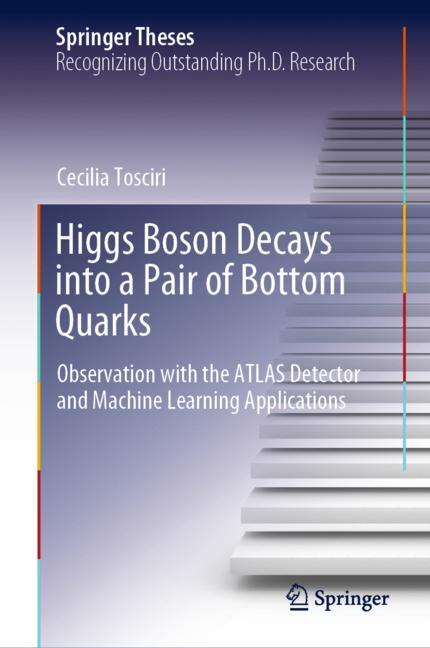
Higgs Boson Decays into a Pair of Bottom Quarks
$179.99
Quantitative Biology of Metabolism
$54.99
Praxis Naturheilverfahren
$34.99
Information Security Practice and Experience
$54.99
Strukturierte Verbesserung des Supply Chain Risikomanagements
$84.99
Foundations of Quantum Mechanics and Ordered Linear Spaces
$39.99
Russische Errungenschaften in der Physiologie der Verdauung
$64.99
Beware the Claw! (Hardcover)
$18.74
Wissensmanagement
$34.99
High-dimensional Microarray Data Analysis
$139.99
The Ancestry of Regional Spatial Planning
$109.99
System-Level Design Techniques for Energy-Efficient Embedded Systems
$84.99
Agua soy y me voy
$5.96
Higher Algebraic K-Theory: An Overview
$34.99
SAP R/3 - Praxishandbuch Projektmanagement
$54.99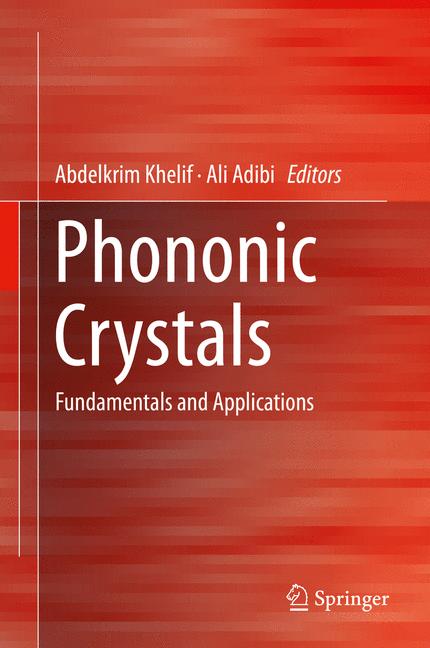
Phononic Crystals
$129.99
Computer Vision ECCV 2020
$109.99
Mathematical Practitioners and the Transformation of Natural Knowledge in Early Modern Europe
$89.00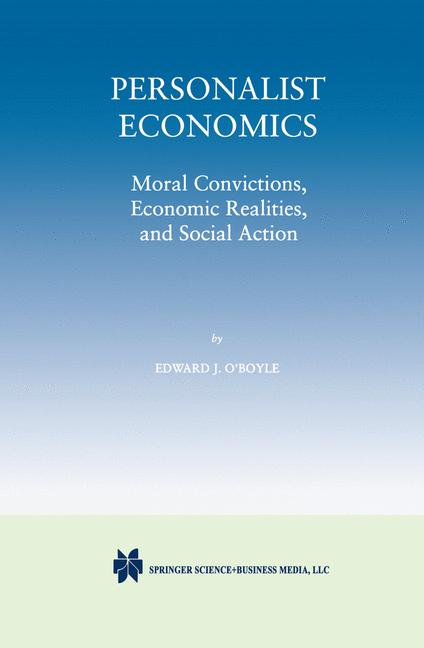
Personalist Economics
$109.99
Phenomenology and Intersubjectivity
$54.99
Robust Control in Power Systems
$169.99
Nord-Sd-Konflikt und Entwicklungspolitik
$69.99
Mohamed Fekini and the Fight to Free Libya
$39.99
Whatever Shines Should be Observed
$109.99
Fallout (Crank Series #3) by Ellen Hopkins
$15.99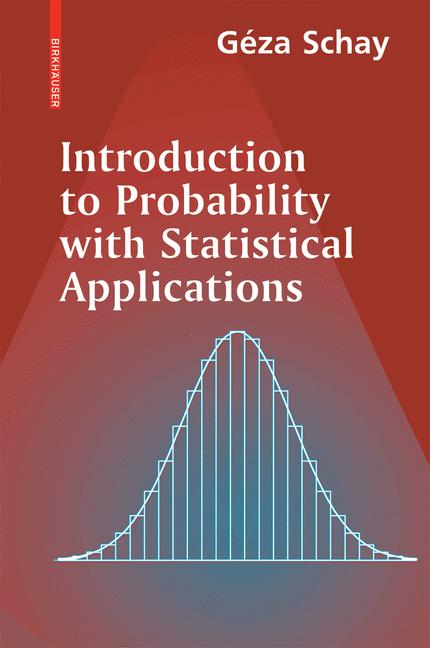
Introduction to Probability with Statistical Applications
$44.99
Electroreception: Fundamental Insights from Comparative Approaches
$199.99

