 Apparel & Accessories
  Vehicles & Parts
  Toys & Games
  Sporting Goods
  Office Supplies
  Luggage & Bags
  Home & Garden
  Hardware
  Furniture
  Copied
Go to and paste the code at the checkout to enjoy
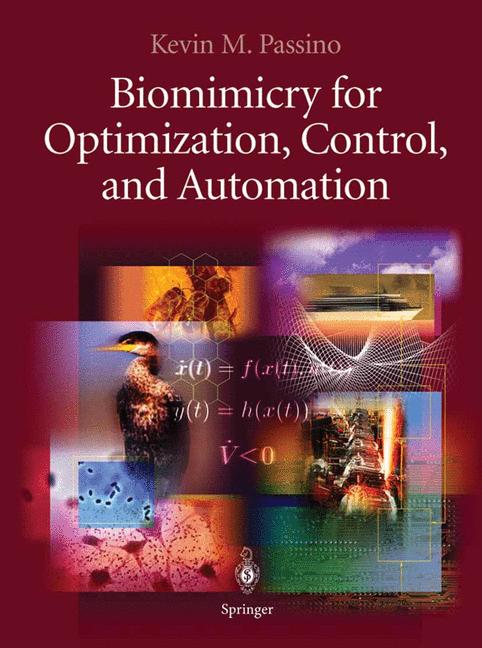
Biomimicry for Optimization, Control, and Automation
Best Price:
Buy Biomimicry for Optimization, Control, and Automation for $89.00 at @ Link.springer.com
No coupon is required — this is the standard retail price.
Set a price drop alert to never miss an offer.
Price Comparison
| Seller | Contact Seller | List Price | On Sale | Shipping | Best Promo | Final Price | Volume Discount | Financing | Availability | Seller's Page |
|---|---|---|---|---|---|---|---|---|---|---|
|
BEST PRICE 1 Product Purchase
|
|
$89.00 | $89.00 |
|
$89.00 | See Site | In stock | Visit Store |
Product Details
Biomimicry uses our scienti?c understanding of biological systems to exploit ideas from nature in order to construct some technology. In this book, we focus onhowtousebiomimicryof the functionaloperationofthe hardwareandso- ware of biological systems for the development of optimization algorithms and feedbackcontrolsystemsthatextendourcapabilitiestoimplementsophisticated levels of automation. The primary focus is not on the modeling, emulation, or analysis of some biological system. The focus is on using bio-inspiration to inject new ideas, techniques, and perspective into the engineering of complex automation systems. There are many biological processes that, at some level of abstraction, can berepresentedasoptimizationprocesses,manyofwhichhaveasa basicpurpose automatic control, decision making, or automation. For instance, at the level of everyday experience, we can view the actions of a human operator of some process (e. g. , the driver of a car) as being a series of the best choices he or she makes in trying to achieve some goal (staying on the road); emulation of this decision-making process amounts to modeling a type of biological optimization and decision-making process, and implementation of the resulting algorithm results in human mimicry for automation. There are clearer examples of - ological optimization processes that are used for control and automation when you consider nonhuman biological or behavioral processes, or the (internal) - ology of the human and not the resulting external behavioral characteristics (like driving a car). For instance, there are homeostasis processes where, for instance, temperature is regulated in the human body.
Reviews
Questions & Answers
Shoulder Concepts 2013: Consensus and Concerns
$109.99
Performance Assessment for Process Monitoring and Fault Detection Methods
$54.99
Wildlife and Emerging Zoonotic Diseases: The Biology, Circumstances and Consequences of Cross-Specie
$219.99
Adaptive Methods in Underwater Acoustics
$329.99
Geschichte Wrttembergs
$89.99
When Puberty is Precocious
$219.99
Animal Models of Human Birth Defects
$84.99
Twilight
$54.99
Cyber-Physical Systems: Intelligent Models and Algorithms
$179.99
Aqueous Biphasic Separations
$39.99
gner
$24.99
Fahrsicherheitssysteme
$54.99
Steuervorteile fr Beamte
$59.99
Playing with America's Doll
$99.99
Information System Value Management
$79.99
Cosmic Chemical Evolution
$169.99
Cryptography and Lattices
$39.99
Erfolgreiche Karriereplanung
$84.99
Elektronenoptik
$34.99
Transnational Outrage
$54.99
Sustainable Smart Cities
$89.00
Das Berechnen von Zahnrdern und Getriebe-Verzahnungen
$64.99
The Forensic Laboratory Handbook
$89.00
Pro T-SQL 2022
$79.99
Handbuch Export Import Spedition
$69.95
Zentraleuropischer Anaesthesiekongre
$69.99
Leben im Treibhaus
$39.99
Mathematical Analysis I
$79.99
Territorial Rights
$109.99
Das 1 x 1 der Prsentation
$34.99
Intelligent Systems and Applications
$219.99
Justice and ResponsibilitySensitive Egalitarianism
$54.99
IoT, Big Data and AI for Improving Quality of Everyday Life: Present and Future Challenges
$139.00
Essential Visual Studio 2019
$39.99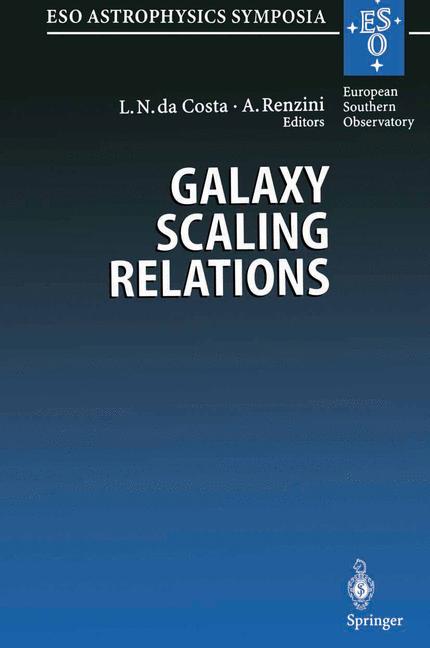
Galaxy Scaling Relations: Origins, Evolution and Applications
$39.99
Computer Aided Verification
$39.99
Chalcogenide Materials for Energy Conversion
$169.99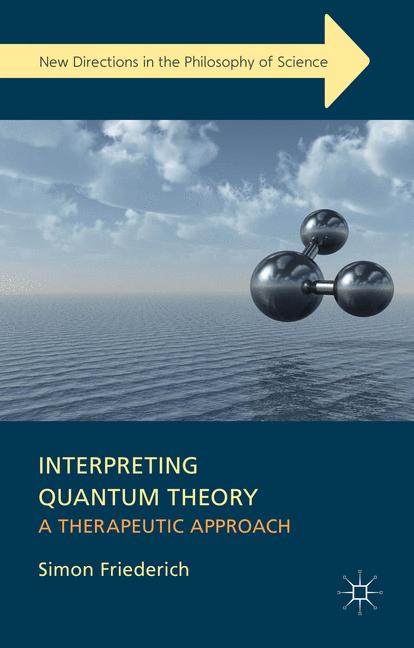
Interpreting Quantum Theory
$54.99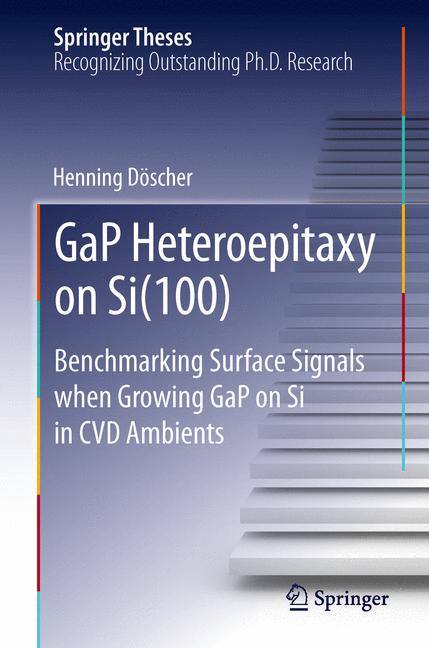
GaP Heteroepitaxy on Si(100)
$84.99
The Korean Government and Public Policies in a Development Nexus, Volume 1
$54.99

