 Apparel & Accessories
  Vehicles & Parts
  Toys & Games
  Sporting Goods
  Office Supplies
  Luggage & Bags
  Home & Garden
  Hardware
  Furniture
  Copied
Go to and paste the code at the checkout to enjoy
The Deceased-focused Approach to Grief
Best Price:
Buy The Deceased-focused Approach to Grief for $109.00 at @ Link.springer.com
No coupon is required — this is the standard retail price.
Set a price drop alert to never miss an offer.
Price Comparison
| Seller | Contact Seller | List Price | On Sale | Shipping | Best Promo | Final Price | Volume Discount | Financing | Availability | Seller's Page |
|---|---|---|---|---|---|---|---|---|---|---|
|
BEST PRICE 1 Product Purchase
|
|
$109.00 | $109.00 |
|
$109.00 | See Site | In stock | Visit Store |
Product Details
Conventional grief models focus on the bereaved, including actions that they need to take to get back to normalcy following the death of a loved one. This book suggests that it might be helpful in the grieving process to focus on the deceased, instead. Research points to the benefits of altruistic acts and thoughts, including improvements in mood. Altruistic acts and thoughts also could be extended to the deceased, who in death has experienced a loss as well. By taking on the perspective of and being empathic toward the deceased, a response shift occurs that could result in mood improvement and happiness in the bereaved. The book provides guidelines for this alternative grief model in the death of a child, of a teenager, of a spouse/partner, and of a sibling; and in multiple deaths and in persistent grief experience among others. Based on motivational principles, a workbook is also provided for monitoring progress in coping with bereavement. Comprehension questions and additional readings are provided in each chapter to help the reader further explore the topic at hand. This book would be useful in a course on death, dying and bereavement; to healthcare practitioners/bereavement counsellors; and to scholars in death, dying and bereavement across different fields including psychology, sociology, social work, public health and religion. Most grief models focus on the bereaved, including actions the survivor needs to take to get back to normalcy after a loss. However, in the grieving process it might be helpful if attention is shifted to the deceased, instead. The bereaved, by doing things she or he perceives as pleasing to the deceased, might receive healing and satisfaction in return. Lisa Farino (2010) notes that there is no shortage of research pointing to the beneficial effects of focusing on others. In a study by Carolyn Schwartz and Rabbi Meir Sendor (1999), lay people with a chronic disease were trained to provide compassionate, unconditional regard to others who had the same illness. The results showed that the providers of care and compassion reported better quality of life than the recipients of care and compassion, even though both givers and receivers had the same disease. The givers showed profound improvements in confidence, self-awareness, self-esteem, depression, and in role functioning. The researchers emphasized the beneficial importance of response shift (the shifting of internal standards, values, and concept definition of health and well-being) in dealing with ones own adversity. Farino (2010) notes that this research is profound because in western culture the belief is that feeling happy tends to be getting something for yourself. There are biological origins to the notion that its better to give than to receive. Using the functional magnetic resonance imaging (fMRI), researchers were able to demonstrate a connection between brain activity and giving. People who gave voluntarily and also for a good cause experienced more activation of the part of brain that controls for pleasure and happiness (e.g, Harbaugh, Mayr & Burghart, 2007). Studies show that about 7% of the US population experience complicated or prolonged grief disorder (e.g., Kersting et al, 2011). This is persistent grief that does not go away, and many parents tend to experience this after the loss of a child. In their study Catherine Rogers and colleagues (2008) found bereaved parents reporting more depressive symptoms, poorer well-being and more health problems after a childs loss almost 20 years later. Survivors usually show concern about how their deceased loved ones felt prior to death and if happy or not in the afterlife (e.g., Eyetsemitan & Eggleston, 2002). A study reported respondents used emotion discrete terms such as sad, happy or angry to describe the faces of deceased persons. The researchers suggested that the perceived emotional state of a deceased loved onecould impact on the survivors mourning trajectory (e.g., Eyetsemitan & Eggleston, 2002). The bereavement model of placing focus on the deceased instead, provides an alternative to existing bereavement models, in helping the survivor to cope with a loss.
Reviews
Questions & Answers

Not Yet
$5.99
Principles of Perioperative Safety and Efficiency
$199.99
Environment and Transport in Economic Modelling
$109.99
Wie fertigt man technische Zeichnungen?
$49.99
Byron V. Garrett Life and Literacy Skills Library Grade 5
$375.00
Document Analysis and Recognition - ICDAR 2023
$119.00
New Frontiers of Biostatistics and Bioinformatics
$179.99
Unified Science
$169.00
Malignant Mesothelioma
$219.99
Ontologie und Axiomatik der Wissensbasis von LILOG
$69.99
Robust Control Design Using H- Methods
$219.99
Energy-Efficient Timber-Glass Houses
$109.99
Energy in Perspective
$49.99
The Emergence and Development of LGBT Protest Activity in Russia
$139.99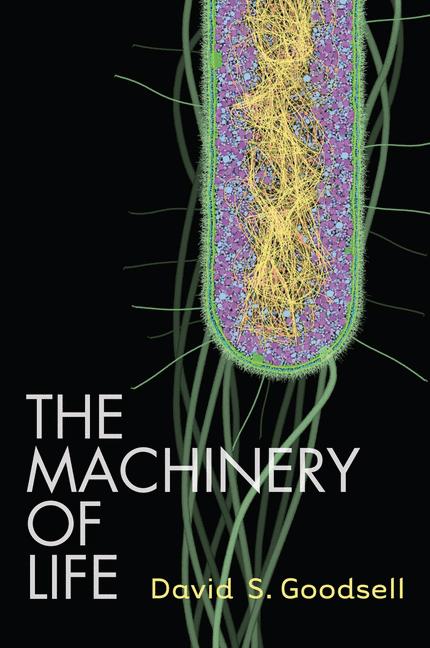
The Machinery of Life
$37.99
The Operation of the Japanese Electoral System since 1994
$99.00
Lithium-Ion Batteries
$169.99
Continental Philosophy of Technoscience
$59.99
Information Extraction in the Web Era
$49.95
Gastro-esophageal Reflux in Childhood Problems of Splenic Surgery in Childhood
$84.99
Artificial Intelligence
$69.99
Life Science Models
$54.99
ADA An Introduction
$74.99
Seals Are Jerks!
$5.24
Model-Based Systems Engineering with OPM and SysML
$99.99
Linked Data
$29.99
Beschleuniger in der Groforschung
$69.99
I Spy Little Hearts
$4.13
The Garden City Utopia
$169.00
Disturbance in Grasslands
$129.00
Handbook of Markov Decision Processes
$299.00
Narrating Southern Chinese Minority Nationalities
$64.99
Gentechnologie fr Einsteiger
$69.99
Information Security Management, Education and Privacy
$84.99
From Revolutionary Movements to Political Parties
$54.99
The EEA Agreement in a Revised EU Framework for Welfare Services
$129.99
The Sound of All Things
$5.96
Advanced Computing Technologies and Applications
$169.00
Kostenberechnungen im Wasserbau und Grundbau
$84.99
Methodological and Historical Essays in the Natural and Social Sciences
$54.99

